Case study · Flows
Funding that keeps builders accountable.
A grants platform for Nouns DAO that combines streamed payments, community review, public progress, and an AI-assisted application.
- Role
- Product, UX, frontend, AI
- Team
- Two people
- Year
- 2024
- Stack
- Next.js, TypeScript, viem, Prisma, Vercel AI SDK
01
The problem
Traditional grants make one funding decision up front, then rely on occasional reports.
Applicants wait through slow reviews, while funded projects can keep their full grant even when the work stalls.
For Nouns DAO, we built an ongoing process where support could grow, shrink, or stop as progress became visible.
02
The product model
The product uses four connected parts:
- Streaming grants. Money moves to builders continuously. The community can change or stop a stream as evidence changes.
- Community review. Token holders assess applicants, verify progress, and challenge projects that no longer meet the bar.
- Conversational applications. An AI interviewer turns a chat into a structured proposal instead of a long grant form.
- Public updates. Builders share progress where the community already participates instead of writing private reports.
03
My role
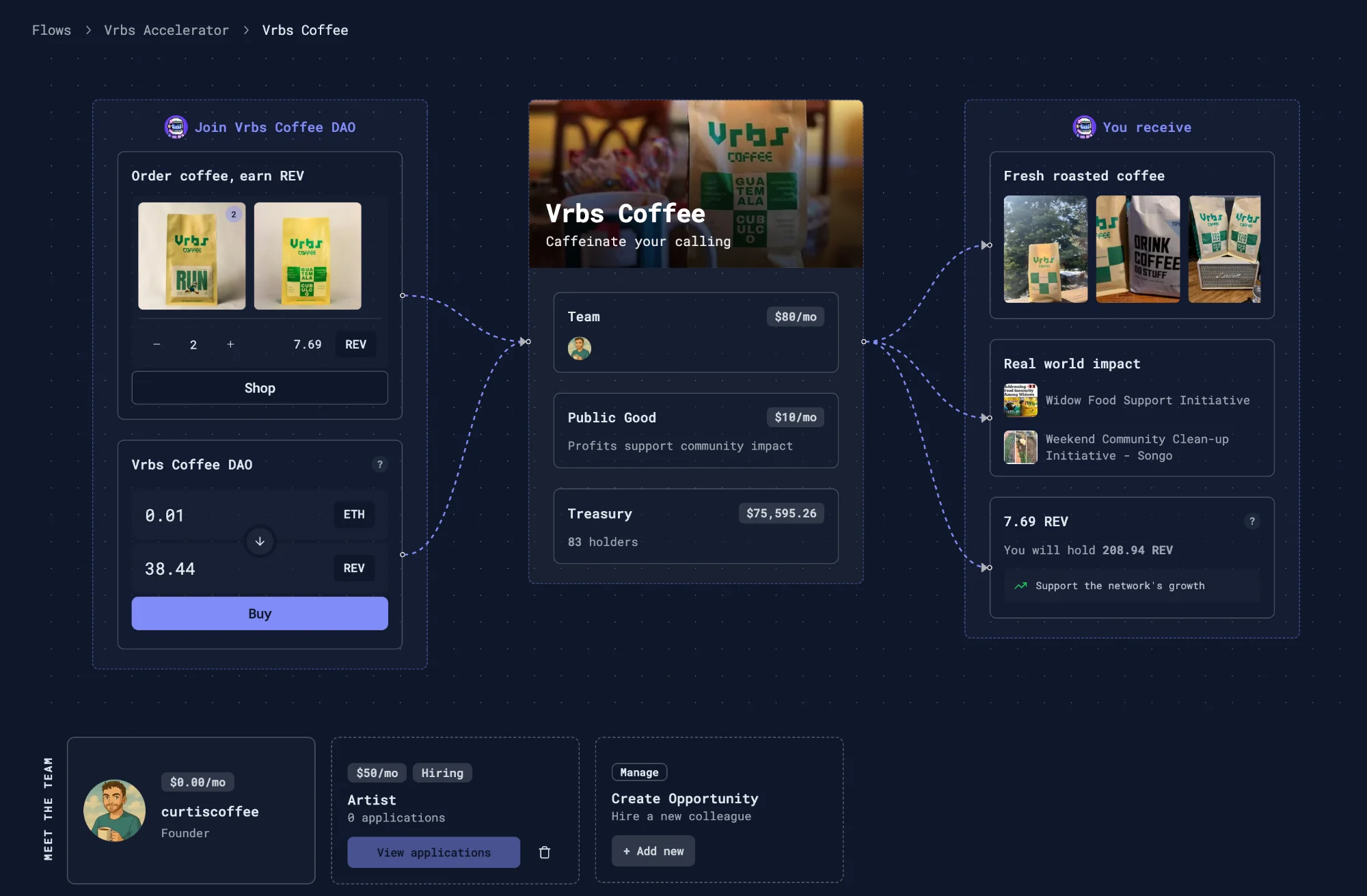
I worked from the first UX decisions through the production frontend and live onchain data.
I designed and built the flows, voting, grant application, and challenge experiences. That included contract integrations, wallet authentication, and early work on the Ponder indexer before that area moved to my co-founder. I integrated the resulting onchain data into fast product workflows.
I also built the AI application flow. I designed the conversation to capture messy, real work and turn it into consistent information for reviewers.
04
What changed
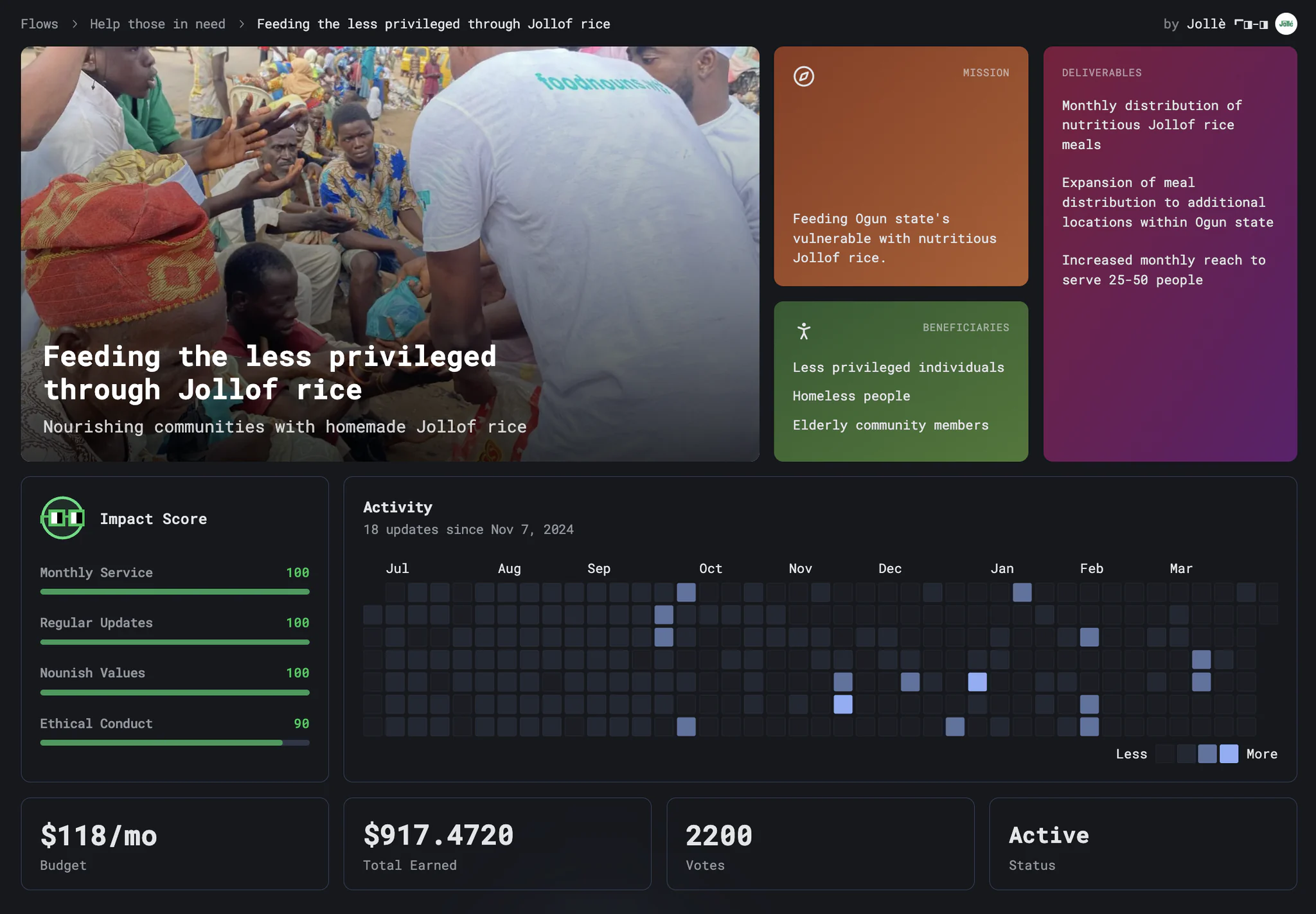
The product funded work around the world, from beach cleanups in Brazil to feeding programs in Nigeria. It allocated more than $180k to over 250 builders worldwide, while the new process funded roughly 80 times more people and reduced failed or fraudulent outcomes by half compared with the previous model.
05
What I learned
- Live balances need different feedback. A stream that changes every second needs clear timing, precision, and transaction states.
- Fast screens needed indexed data. The interface could not query raw blockchain events for every user question.
- The AI had a specific job. The guided conversation replaced a long application form and still gave reviewers consistent information.